Skiving removes material from an existing opening. Roller burnishing plastically works the surface after that cutting task. The two actions can share a tool, but the process name does not identify one universal forward-and-return sequence.
Cutting and forming have separate tasks
ECOROLL’s cylinder-tube article describes the cutting stage followed by rolling elements that plastically work the remaining surface texture. Its cylinder-processing page also describes deliberately separate skiving and burnishing tools. These are published tool architectures, not inspection results for the reader’s tube.
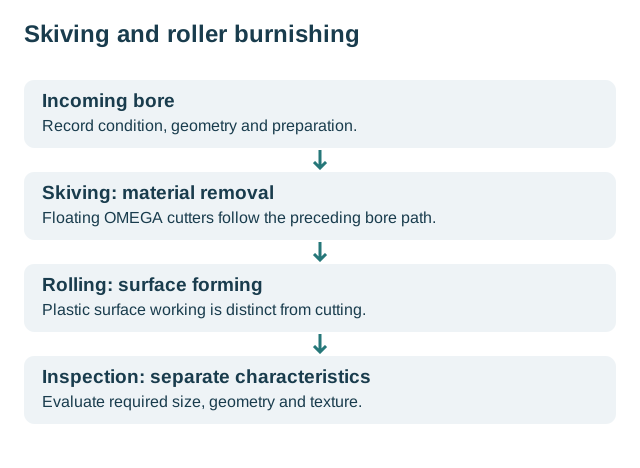
The sequence diagram below separates the incoming bore, cutting, rolling and final inspection. A proposed route needs to state what enters the cutting stage and what each operation is expected to deliver. The roller stage should not be described as another material-removal pass.
The return can be part of the treatment
Sugino’s Skive Roller description distinguishes one-way treatment, where both operations occur on the forward stroke, from two-way treatment, where skiving occurs forward and rolling on return. In the latter arrangement, return time includes a processing task. It is not directly comparable with a quick-return interval.
This distinction matters before timing a cycle or selecting settings. Retain the named tool and its applicable operation documents; an explanatory sequence is not a machining programme for all constructions.
Surface improvement and bore path differ
The ECOROLL article says its floating cutters follow the prior bore. That construction’s local size and texture tasks do not establish universal correction of the preceding bore path. Identify any outstanding geometry requirement separately from the surface treatment.
As an editorial illustration, a tube may have an acceptable local texture result while an axis-related characteristic remains unmeasured. The successful texture evaluation is useful within its region and parameter. It cannot close the missing geometric question.
Choose the next decision
If the incoming condition is unclear, begin with bore preparation and stock allowance. If the tool architecture is already proposed, examine the forward/return cycle and its interfaces. Compare final results against the actual drawing rather than adopting a supplier’s general productivity or finish claim.
The RFQ worksheet collects the defined delivery scope. Continue to the cycle comparison for tool sequencing or OMEGA geometry for a particular floating-cutter example. No universal allowance, roughness value or replacement rule for honing is implied by this introduction.
Revision note
October 8, 2026: revised the technical explanation and connected reading after source review. Original publication date and URL retained.