An AI drilling alarm identifies a signal event within the system’s evaluated scope. A physical fault diagnosis needs additional evidence. The distinction is particularly important when a monitoring report is extended from detecting breakage to naming wear, blockage or a delivered-bore defect.
What the completion report says
IFW’s April 1, 2026 AutoBohr report describes coordinated modules that identify drilling phases and evaluate each stage, using historical information and neural networks where prior process data are unavailable. It reports testing at a contract manufacturer and detection of anomalies including tool breakage under changing parameters.
This is an institutional completion account. It provides a development and application description, but no numerical false-alarm rate, missed-event rate or detection-delay distribution for a new gun-drilling/BTA installation. Nor does it publish a validated cause classifier for all chip jams and worn edges.
An event label needs a reference
Define what each proposed class means and which independent finding establishes it. A confirmed broken tool, a photographed worn edge and a measured bore deviation are different labels. A signal threshold alone cannot make them interchangeable.
Tamura and Matsumura’s dry twist-drill study illustrates the distinction: force records were interpreted alongside chip, edge and bore observations. That defined experiment does not train or validate another AI system; it shows why a physical reference is useful when assigning a label.
Evaluate ordinary changes as well as faults
An editorial evaluation record should include expected transitions, such as entry and exit, and changes the proposed system must tolerate. Retain event truth, model version, alarm time and the corresponding tool/bore observations. Count missed events and false alarms against a declared evaluation set rather than reporting only selected detections.
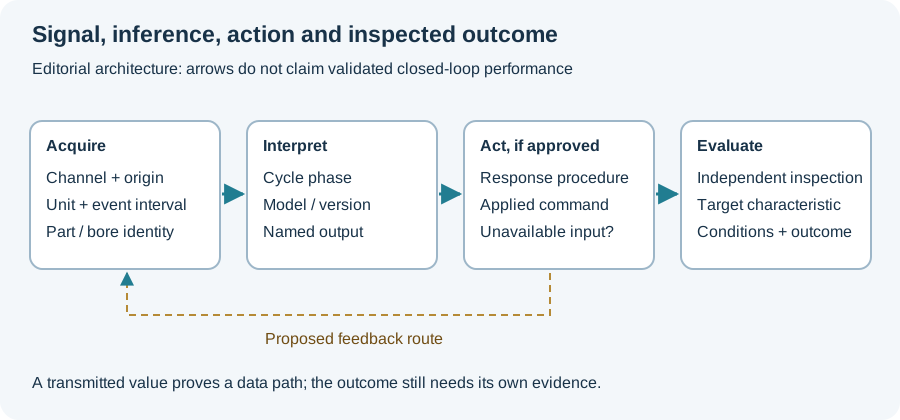
If the system responds by pausing or changing a command, preserve that configured response separately from the detection result. The feedback diagram below marks those stages; a successful alarm does not establish a successful corrective action.
Use the incident worksheet to retain a real event and its eventually confirmed cause. Continue to the AutoBohr research review for the reported architecture, or data acquisition to ensure that the signal and reference label belong to the same bore.
Revision note
October 8, 2026: revised the technical explanation and connected reading after source review. Original publication date and URL retained.