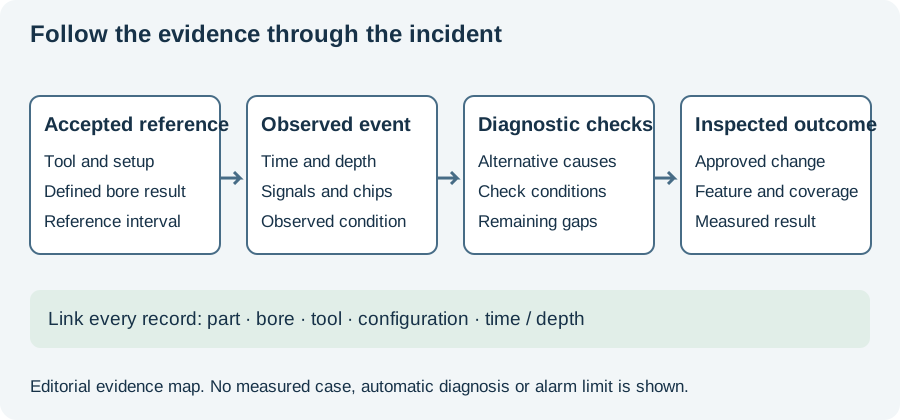
Deep hole drilling troubleshooting works better when the first question is specific: what changed, where, and in which drilling method? A load alarm, missing chip return and failed bore measurement are different observations. Route each to the record that can resolve it before proposing a common remedy.
One symptom can have several contributors
Star Cutter’s gun-drilling account lists multiple contributors to poor surface, hole size and tool life. That manufacturer advice supports a reason to investigate alternatives; it does not establish the cause of a particular reader’s event. Its broad parameter suggestions should not become universal BTA or ejector remedies.
Retain the method, tool assembly, setup and event depth. A supply or return check means different physical paths in gun drilling, BTA and ejector arrangements. The circuit articles linked from the symptom routes explain those distinctions.
Choose the evidence category
| Recorded observation | First unresolved question |
|---|---|
| Fluid reading changed | Same point, unit and operating state? |
| Chip return changed | Which outlet and interval; what physical finding? |
| Vibration or sound changed | Which acquisition channel and drilling region? |
| Geometry report failed | Which feature, reference and measured coverage? |
| Motion differed from plan | Which CAM/post/control handover diverged? |
This is an editorial routing aid, not a cause table. Several observations can belong to one event without uniquely naming one fault.
Keep evidence within its scope
Gühring’s PQ3000 description concerns a stationary actual-tool supply check. Novacam’s straightness account concerns measured profiles and their evaluation. Neither observation should be expanded beyond the state or locations it describes.
Keep the original records and competing explanations visible. Select a comparison that addresses one unresolved question and retain the resulting tool/bore findings. If several conditions change together, report the configuration change rather than claiming that one adjustment caused the improvement.
The timeline below connects last accepted output, the event and subsequent checks. Use the incident worksheet to preserve those relationships. Continue to symptom routing for the narrower technical page, or the diagnosis walkthrough to develop a testable explanation.
Revision note
October 8, 2026: revised the technical explanation and connected reading after source review. Original publication date and URL retained.